

When most people picture a Viking ship, they imagine fierce Norse warriors sailing across the sea during the Viking Age. So it may come as a surprise that one of history's most famous fleets of "Viking ships" actually continued to sail even after what most historians consider the end of the Viking Age.
How is that possible? The answer lies in one of medieval Europe's greatest works of art, the 230 foot long Bayeux Tapestry.
But wasn't the Viking Age over?
Most historians date the Viking Age from the raid on Lindisfarne in 793 AD to the defeat of the Norwegian king Harald Hardrada at the Battle of Stamford Bridge in 1066.
Ironically, just three weeks later, another massive invasion fleet crossed the English Channel. But this wasn't a Viking fleet. It belonged to William, Duke of Normandy, later known as William the Conqueror.
The Normans weren't Vikings... or were they?
Not exactly. The Normans were descendants of Vikings.
In 911 AD, the Viking leader Rollo was granted land in northern France by the Frankish king Charles the Simple. In exchange, Rollo agreed to defend the region against future Viking raids.
The territory eventually became known as Normandy, literally meaning "Land of the Northmen." Over the next 150 years, Rollo's descendants underwent an incredible transformation.
For the most part, they:
- converted to Christianity,
- adopted the French language,
- embraced feudal society,
- married into Frankish noble families,
- became one of Europe's most powerful military aristocracies.
By 1066, they no longer thought of themselves as Vikings.
They were Normans.
So why do their ships still look like Viking ships?
Because technology doesn't change overnight. Take one look at the ships embroidered on the Bayeux Tapestry and you'll immediately notice their unmistakable Scandinavian heritage.
They feature nearly every hallmark of the classic Viking longship:
- clinker-built hulls made from overlapping planks,
- shallow draft for beach landings,
- symmetrical bow and stern,
- single square sail,
- steering oar mounted on the starboard side,
- long rows of oars,
- carved animal-head stem posts.
In fact, many maritime historians consider the Bayeux Tapestry to be one of our best surviving contemporary illustrations of ships descended directly from Viking longships.
Were those dragon heads?
Some of them certainly appear to be. Several ships on the tapestry display elaborate carved animal heads at the bow, while others have simpler curved stems.
This closely matches archaeological evidence showing that Viking ships could have a variety of stem decorations, and medieval sources even suggest that some carved figureheads were removable.
Whether dragon, serpent, or another beast, these decorative carvings continued a long Scandinavian shipbuilding tradition.
Were William's men actually Vikings?
No. By 1066, William's army was culturally Norman. His knights spoke Old French. They fought as mounted cavalry. They followed the feudal traditions of medieval France.
Yet many of their noble families could trace their ancestry directly back to Viking settlers who had arrived in Normandy generations earlier.

In other words:
The warriors had changed.
The ships had not
...at least not entirely.
Our Norman Invasion T-Shirt (seen here ), was inspired by the artwork found on the Bayeux Tapestry and is designed to resemble the richly embroidered medieval needlework. This particular scene depicts one of many Scandinavian-inspired longship carrying the forces of William, Duke of Normandy, during the Norman invasion of England in 1066.
Across the top and bottom of the design appears the original Latin inscription:
NAVES DVCIS EXERCITVS VENIVNT IN ANGLIAM
Loosely translated, it means: "Duke (William's) fleet comes to England."
A remarkable transition
The year 1066 marked one of history’s most fascinating transitions. Early that year, Harald Hardrada, the Norwegian king often regarded as the last great Viking ruler, invaded England and was defeated at the Battle of Stamford Bridge.
Only weeks later, William of Normandy launched a second invasion. His ancestors had once been Vikings themselves, and his fleet still relied on the Scandinavian clinker-built shipbuilding tradition.
Harald Hardrada represented the final chapter of the Viking Age. William’s conquest marked the beginning of Norman England.
The legacy of the Viking longship
The Bayeux Tapestry reminds us that history doesn't change overnight.
Cultures evolve gradually. Languages change. Religions change. Kingdoms rise and fall.
But some technologies become so successful that they endure for generations.
The longships embroidered on the Bayeux Tapestry are more than Norman transports. They represent the final evolution of one of the greatest shipbuilding traditions in history, a tradition born in Scandinavia that continued to shape medieval Europe long after the Viking Age itself had come to an end.
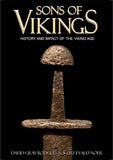 About Sons of Vikings
Sons of Vikings is an online store offering hundreds of Viking inspired items, including Viking jewelry, Viking clothing, Drinking horns, home decor items and more.
To learn more about Viking history, we recommend our 400+ page, self titled book that is available here.


